


Approaches & Strategies
As previously discussed, there are numerous elements that go into housing construction that are not impacted by municipal regulations and therefore are not discussed further below. For any municipal ordinance amendment and/or policy change, careful consideration needs to be given by the municipality for possible impacts and how to most effectively implement the overall municipal vision while still providing for adequate housing diversity. While every method identified may not be possible for all municipalities, each should be given consideration. Implementation of multiple measures and methods to reduce housing construction costs, taken together, can positively impact the unit cost of a home, lessening the burden on individual homeowners. An overview of various methods that can positively impact construction costs is divided into the following categories: development review process, infrastructure, bonuses, and zoning.
Development Review Process

One area a municipality can specifically impact overall housing costs is through their development review process. Specifically a municipality can ensure their ordinances are modern, consistent, and allow for flexibility to encourage better-planned communities. Further, they should also be encourage development representing households of all income levels, ages, and sizes. Ensuring a clear and timely review process helps in controlling costs, as it reduces uncertainty and can improve overall project financing.
Municipal ordinances
Municipal zoning and subdivision and land development ordinances are living documents, and they should be regularly reviewed and amended as necessary to ensure they are consistent with contemporary planning and building processes and trends. Specific attention should be given to definitions and efforts made to ensure all defined terms are clear and unambiguous to avoid confusion and conflicts. Further, municipalities should ensure all defined terms are consistent between various ordinance chapters as to not create conflicts in their interpretation. This consistency can result in cost savings as fewer plan revisions and reviews may be required to address outdated regulations and/or differences in how definitions may be interpreted.
Digital submission
Most municipalities require plan submissions be printed in a large format with sufficient copies for municipal review by staff, outside consultants, the Planning Commission, and the governing body. Consideration could be given to not requiring paper copies until final approval when they are required for recording at the Recorder of Deeds. Digital submissions could be required instead throughout the review process as the plan is refined and brought into conformance with all applicable municipal regulations. Digital submissions can more efficiently be forwarded to outside review agencies and potentially reduce the amount of time needed for review as well as printing costs associated with the project.
Fees
Any fees charged as part of the development review process should be "reasonable and necessary charges" as defined in the Municipalities Planning Code.11 The municipality should annually review and confirm with their solicitor that any fees be charged are "reasonable and necessary" as excessive fees can legally be challenged by the applicant and refunded. A legal challenge to excessive fees can be both costly and time consuming as it goes through the appeal process defined in the municipal code.
Further fee related costs are incurred from municipal consultants such as the municipal engineer, planner, solicitor, etc. Although these fees are not levied by the municipality, they are still subject to the limitations on fees as prescribed by the MPC. Consideration should be given to minimizing these costs to the greatest protractible extent, and ensuring these fees are "reasonable and necessary" as defined by the MPC. It is essential the municipality regularly review fees charged by consultants as to ensure they are appropriate as defined by the MPC to avoid any potential challenges to them by applicants.
Shortening the review process
Depending on the type of project being proposed and whether or not it requires zoning amendments and/or additional municipal approvals (i.e. conditional use, special exception, zoning relief, etc.), the time it takes to gain project approval can impact overall costs. This is the case as increased approval times can impact overall project financing as it increases the overall risk a lender may be willing to take. The extended project timeline that ensues can result in additional cost burdens that are passed on to the buyer.
Municipalities should consistently review their allowable uses and consider making more residential uses by-right when practicable and aligning with overall municipal goals. By-right developments have a significantly quicker review period, which can reduce overall risk and result in more manageable financing terms from construction lenders.
11. Section 503(1) of the MPC as it relates to fees charged as part of the land development process states: "Review fees may include reasonable and necessary charges by the municipality's professional consultants for review and report thereon to the municipality. Such review fees shall be based upon a schedule established by ordinance or resolution. Such review fees shall be reasonable and in accordance with the ordinary and customary charges for similar service in the community, but in no event shall the fees exceed the rate or cost charged by the professional consultant for comparable services to the municipality for services which are not reimbursed or otherwise imposed on applicants. Fees charged to the municipality relating to any appeal of a decision on an application shall not be considered review fees and may not be charged to an applicant."
Infrastructure
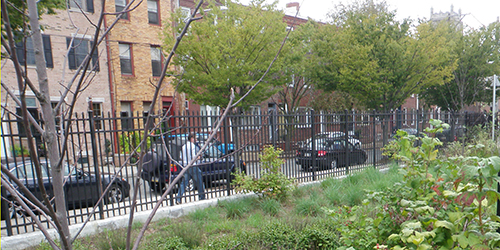
As part of most municipal subdivision and land development ordinances, standards and specifications for infrastructure improvements are generally defined. Although these can be waived at the discretion of the governing body, having more flexible standards and specifications built into the ordinances for infrastructure improvements can serve to more consistently reduce overall costs of both materials and engineering on the front end of the project. A few of the infrastructure costs that can be impacted through regulatory standards include: street dimensions, use of cul-de-sacs, stormwater management, and sanitary sewers.
Street dimensions
Some municipalities require larger street dimensions than needed, even for developments without large projected volumes of traffic. Usually the rationale for wider streets is for perceived needs of emergency responders and to address issues such as snow removal. Although these are important considerations, properly designed streets having narrower dimensions can adequately accommodate these needs. Not all streets may be appropriate to consider for a reduction in dimensions, but those serving lower traffic volumes may be appropriate for an overall dimensional reduction. A municipality should determine what street dimensions are appropriate for their unique circumstances, and consider this in light of traffic volumes and land uses in the immediate vicinity.
Narrower streets save money for developers as less pavement is used during construction, and save money for municipalities as there is less pavement needing long-term maintenance. Reduced impervious cover can also reduce stormwater facility costs. For most two-way residential streets, a 24-28 foot width is considered to be adequate for safe and reasonable travel. Although directly tied to the variable costs of oil, construction costs for asphalt were approximately $15/square yard in 2020. As such, reducing residential street standards from a width of 32 feet to 26 feet would yield savings of approximately $1,000 for a 100-foot long road length. Additional cost savings are further achieved through reductions in other material (subbase, stormwater BMPs) and construction (grading) costs initially borne by the developer and then passed onto the municipality through dedication of completed roads.
Cul-de-sacs
Although commonplace in many suburban communities, the implementation of cul-de-sacs should be minimized to the greatest extent practicable. Instead, overall layouts that incorporate traditional street grid designs instead of cul-de-sacs can serve to reduce the total road lengths required and overall impervious areas. Just as with narrower streets, fewer cul-de-sacs result in cost savings to both the developer and municipality with lowered construction and maintenance costs. Additionally, fewer cul-de-sacs promote greater connectivity of the municipal street network, which can also result in less congestion and greater pedestrian opportunities. Safety concerns can be addressed through appropriately designed and implemented traffic calming measures.
Stormwater management
As federal and state mandates continue to impose more stringent requirements on addressing both the quantity and quality of stormwater runoff, costs to address these requirements continue to rise. In addition to costs incurred by the developer for their installation, municipalities and individual property owners also have costs incurred through continued inspection and maintenance of these facilities for full compliance with their municipal separate storm sewer systems (MS4) permit.
To address this issue, a municipality should ensure their existing ordinances as they relate to stormwater management allow for innovation and flexibility in design to address this issue. This is not to suggest a municipality not adequately fulfill their MS4 requirements, but rather be open to innovative alternatives that may not be specifically defined in their existing ordinances, subject to review and approval of the municipal engineer. Further, municipalities should encourage stormwater design that encourages natural surface drainage and infiltration that reduces the need for costly structural BMPs and their long term maintenance.
The Chester County Planning Commission has developed an eTool for Floodplain Protection that provides information and strategies for implementation of floodplain protections. Further guidance on Stormwater Management BMPs is a separate eTool as well.
Sanitary sewers
Generally to construct homes at a higher density, public sewer access is required as on-lot systems require specific soil types and large areas reserved for active and reserved drainfields. Expansion of public sewer networks for new development is identified through Act 537 planning, however; physical construction for new residential developments is generally undertaken by the developer at a significant cost. Additionally, connections to public sewer require payments of Equivalent Dwelling Units (EDUs) for each unit constructed. Municipalities should regularly ensure EDU charges are appropriate for the development being serviced as well as consider alternate sewer designs when appropriate.
Bonuses
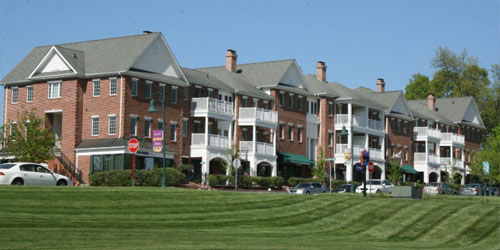
Bonuses are a discretionary tool, enabled by the MPC12 and available to municipalities, that can potentially reduce overall construction costs and can take a variety of forms. Carefully crafted bonuses can be successful in mitigating overall construction costs as they can allow the builder the ability to more effectively utilize their land assets. Providing a bonus should be directly tied to achievement of a broader community goal for the municipality, such as the developer providing affordably-priced units as part of their overall project.
The Chester County Planning Commission has developed an eTool for Affordable Housing Bonuses that provides additional information on the various bonus types listed below.
Density bonuses
A density bonus allows for a developer to exceed the maximum allowable units per acre in the base zoning in exchange for the provision of affordably-priced units. The additional density allows the developer the ability to spread infrastructure and other costs across more units, thus reducing the overall cost burden on a unit-to-unit basis. Further, increased density allowances significantly reduce land costs as it allows for additional units to offset the costs of land.
Flexible lot and bulk standards
Flexible lot and bulk standards allow for a developer to examine alternate development layouts that may result in lower construction costs. These standards include, but are not limited to yard setbacks and maximum coverages. This can be accomplished by allowing for more creativity in the avoidance of natural resources and other sensitive areas, as well as reducing overall delay and risk without the need to apply for possible variance relief through a Zoning Hearing Board. The potential cost savings could reduce the overall cost burden on a unit-to-unit basis.
Height bonuses
A height bonus allows for a developer to exceed the maximum allowable height in the base zoning in exchange for the provision of affordably-priced units. Utilized predominately in the development of multi-family units, an allowance of increased height allows for greater units without the expense of additional land acquisition.
Use bonuses
In an effort to provide for more of the "missing-middle" housing types (i.e. duplexes, twins, cottage courts, townhouses, apartments) consideration should be given to allowing for the development of housing within zoning districts that may not be otherwise permitted, only if affordable units are part of the development. This can be an effective bonus as it allows housing types to be built that would not be allowed normally, such as allowing apartments in an office park.
12. Section 603(C)(6) of the MPC as it relates to housing zoning bonuses allows for: "provisions authorizing increases in the permissible density of population or intensity of a particular use based upon expressed standards and criteria set forth in the zoning ordinance."
Zoning
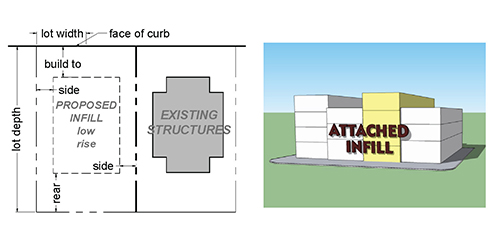
As previously mentioned, land costs are predominantly impacted by market forces and generally the municipality has little influence over this factor. However, an area where a municipality can influence this factor is through its zoning ordinance and map, as the MPC requires municipalities to provide for their fair share of all housing types within their jurisdiction.
Zoning map
Across Pennsylvania, it has been recognized there is not sufficient land zoned for medium density (four to eight units per acre) and high density (greater than nine units per acre) to fully address anticipated housing need.13 Many municipalities only provide for the minimum amount of zoned land for medium and higher density housing to meet their fair share requirements. A zoning study can be used to determine where additional land could be rezoned to allow for medium and/or high density residential development. This can increase the availability of lands available for this type of development and in turn potentially reduce the underlying costs of the land to construct it on a per unit basis.
Cluster development
Cluster development standards allow for residential units to be clustered with smaller lot and bulk requirements and larger areas of contiguous preserved open space. Costs are reduced with cluster provisions due to reduced infrastructure and site work costs. Most municipal zoning ordinances provides for cluster design, however; in many cases this option is only available with a large initial tract size. Municipalities can reduce the minimum tract size to allow for smaller-scale cluster developments, as well as allow for their development by-right with appropriate design standards.
The Chester County Planning Commission has developed an eTool for Cluster Development that provides additional information on its benefits and considerations for municipalities seeking to implement it.
Allowable housing types
Most zoning ordinances provide for only limited areas where medium-density, or "missing middle,"" housing types such as twins, duplexes, quadplexes, and cottage courts can be constructed. Historically these use types were more prevalent and seamlessly incorporated into the built environment. These housing types can result in overall cost savings through an increase of allowable units. Municipalities should consider additional areas and/or zoning districts where these housing types can be appropriately accommodated.
Flexible parking standards
Flexible parking standards allow for a developer to demonstrate overall need for parking on a case-by-case basis, which can have a significant impact on required parking for larger developments of townhouses and apartment complexes. Reduced parking requirements can lessen overall impervious cover and the required amount of stormwater management, and allow greater flexibility for more efficient site designs.
Consideration could be given to development of parking ratios based on the number of bedrooms instead of total square footage or total number of units to reduce the total number of spaces required. Further consideration could also be given to flexibility in the dimensional standards of parking spaces, in addition to the encouragement of shared parking when feasible to reduce required impervious areas.
The Chester County Planning Commission has developed eTools for the design and planning of parking facilities to assist municipalities in development of parking regulations and standards.
Flexible landscaping standards
Landscaping provisions in municipal ordinances are prescriptive and not site specific in nature. This can result in the requirement of landscaping and street trees in excess of what may be appropriate for a specific site. The municipality should allow for flexibility in landscaping design based on unique site constraints that meet the spirit of the ordinance. Further consideration could also be given to encourage natural vegetation that requires less expense in its installation as well as with its long-term maintenance. A reasonable fee-in-lieu can also be considered for landscaping, but the municipality should have a program in place where those fees are sent and expended.
Impervious Coverage
Most zoning ordinances have maximum impervious coverage allotments, which limit the area on a particular parcel that may be developed. Furthermore, municipal stormwater management ordinances mandate all runoff resulting from new construction and/or impervious areas must be offset through appropriate stormwater management techniques and/or facilities. As impacts for stormwater are already addressed through municipal stormwater management ordinances, an increase in allowable development area would often have minimal negative impacts.
Consequently, municipalities could consider increasing in the amount of impervious coverage allowed if affordably priced units are included as part of the proposed development. Although the increased impervious area may result in higher stormwater management costs, the increase can allow for construction of additional units that offset these costs. Increasing allowable impervious surface coverage can also potentially lower overall development costs by maximizing infrastructure that must be implemented regardless of the allowance of affordably priced units. However, municipalities need to ensure that any allowable increase in impervious coverage will not negatively impact requirements for open space and/or recreational amenities.
Performance zoning
Performance zoning regulates the design and location of a use based on the characteristics of a particular site to support development. This is in contrast to traditional zoning that mandates set lot and bulk standards regardless of project scope, size, or location. A municipality can consider adoption of performance zoning standards that can result in more efficient use of the land, which is generally consistent with existing development patterns, and which can in turn reduce overall costs. These standards can lessen delay and risk for the developer as it reduces requests for variances and waivers as part of the development process.
The Chester County Planning Commission has developed an eTool for Performance Zoning that provides additional information on its benefits and considerations for municipalities seeking to implement it.
13. Reducing Land Use Barriers to Affordable Housing 2015